As the world marks the World Day Against the Death Penalty on 10 October 2025, under the theme “Challenging the Misconception That the Death Penalty Enhances Security for Individuals and Communities,” the Kingdom of Saudi Arabia stands out among the countries with the highest number of executions worldwide, consistently ranking among the top three.
The commemoration of this day aims to renew the commitment to defending the right to life and to call for a review of the policies of states that still enforce the death penalty, despite the growing international consensus on its abolition. In contrast, Saudi Arabia continues to justify the practice through systematic and extensive invocation of “security,” portraying executions as a means of protecting society. In reality, the death penalty undermines security, spreads fear, and erodes public trust in justice and the state.
“Security” in Official Discourse
The Saudi Press Agency regularly publishes statements from the Ministry of Interior announcing executions. These statements are the only official source for information on death sentences and executions. They often open with Quranic verses to confer religious legitimacy on the punishment. As the number of executions has increased in recent years, these statements routinely end with justifications citing “security,” “justice,” and “deterrence,” linking executions directly to national and social stability.
Examples of this recurring narrative include
Terrorism charges
“The Ministry of Interior affirms its commitment to maintaining security and achieving justice, to eliminate anyone who attempts to endanger national security or unity, and that legal punishment will be the fate of anyone who does so, as a deterrent to others.”
Drug-related charges
“The government is keen to protect the security of citizens and residents from the scourge of drugs and to impose the severest penalties on traffickers and dealers, due to the harm they cause to lives and society. It warns anyone who engages in such acts that legal punishment will be their fate.”
Military treason charges
“The government is committed to protecting national security and imposing the harshest penalties on perpetrators of major military crimes. It affirms its trust in the loyal members of the armed forces who have honored their oath and sacrificed their blood to protect the nation and its holy sites.”
Murder charges
“The government affirms its commitment to maintaining security, achieving justice, and implementing Islamic law against anyone who attacks innocent people and sheds their blood. It also warns anyone who dares to commit such acts that legal punishment will be their fate.”
The Death Penalty as a Tool of Power
Official practices indicate that Saudi Arabia’s persistent use of executions goes beyond criminal punishment; it functions as a means to instill fear and reinforce political control.
In a 2023 interview with Fox News, Crown Prince Mohammed bin Salman did not deny the death sentence initially issued against detainee Mohammed al-Ghamdi for social media posts. Instead, he stated that “judges in Saudi Arabia issue such sentences in accordance with their judicial system.” Although the sentence was later reduced on appeal, the statement itself reflects the alarming reality that anyone could face execution simply for an opinion or an online post.
In many cases, Saudi authorities employ exaggerated narratives to justify executions. For example, in the case of 17-year-old Jalal Labad, executed in September 2025, the European Saudi Organization for Human Rights documented how the official statement inflated the charges. While his actual charges related to providing medical assistance to “wanted persons,” the statement accused him of kidnapping and murder.
Similarly, several intellectual and religious figures currently face death sentences for their views, including cleric Salman al-Odah, charged with political offenses related to his expression of opinion, and researcher Hassan al-Maliki, who faces charges tied to his scholarly and religious writings.
In recent years, Saudi authorities have also carried out mass executions to generate collective fear within society. Political and criminal charges are often merged in a single official statement to confuse the public and legitimize state violence under the guise of law. This practice not only reflects a lack of judicial transparency but also aims to obscure the political nature of cases and reframe them as ordinary criminal acts, allowing the authorities to market them as “justice being served.
Lack of Justice
The ongoing and increasing use of the death penalty is accompanied by grave human rights violations and deep flaws in the justice system. Despite a lack of transparency, systematic practices are evident across numerous cases, including:
Torture and ill-treatment:
Detainees are subjected to physical and psychological torture to extract confessions, including beatings, sleep deprivation, solitary confinement, and threats against family members.
Coerced confessions as trial evidence:
Courts frequently rely on forced confessions as the basis for sentencing, even when defendants retract them and testify to torture. This practice violates international legal standards, including the Convention against Torture and Other Cruel, Inhuman or Degrading Treatment or Punishment, which Saudi Arabia has ratified.
Denial of the right to adequate defense:
Defendants often face significant obstacles in accessing legal representation or sufficient time to prepare their defense. Some are denied the presence of their lawyers during interrogations or early hearings.
Systematic discrimination against foreign nationals:
Migrant workers constitute a large share of those sentenced to death, particularly in drug-related cases. Many are denied translation services during investigations or trials and lack effective legal representation, leaving them especially vulnerable to unjust verdicts.
Continued Intimidation After Executions
The use of executions as a tool of repression extends beyond the moment of death. Authorities implement punitive measures against families, denying them the right to say goodbye, retrieve the body, or hold funeral ceremonies.
Families are also often denied information about burial sites, turning the execution into a punishment that continues after death. The European Saudi Organization for Human Rights has documented repeated cases of systematic intimidation of victims’ families when they request the remains or seek to hold funerals. There have also been cases in which the authorities refused to repatriate the remains of foreign nationals executed in the Kingdom, in flagrant violation of human dignity and of religious and legal norms.
Conclusion
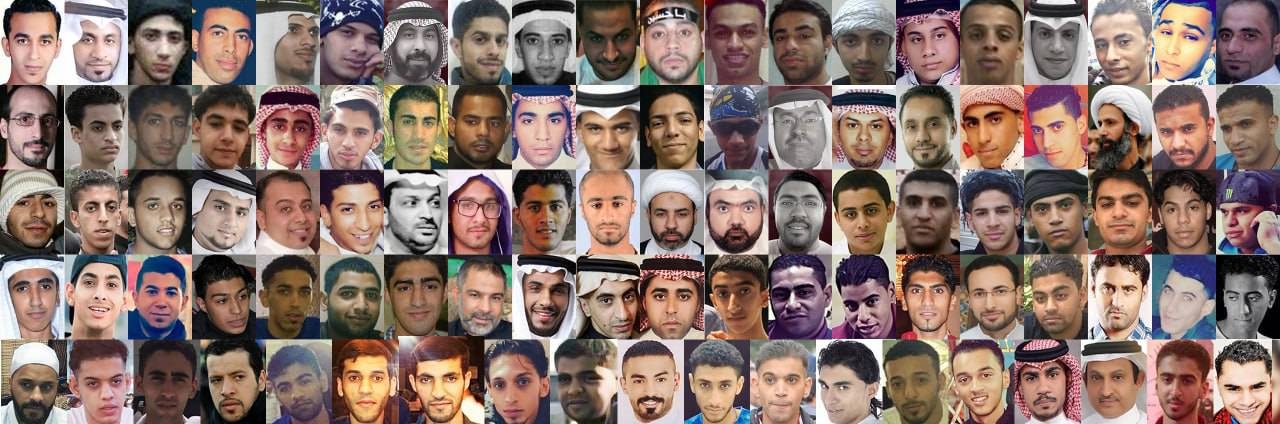
On this World Day Against the Death Penalty, the European Saudi Organization for Human Rights reports that Saudi Arabia has broken its own records for executions compared to the past decade. In 2025 alone, the authorities executed 287 people of 17 different nationalities. Since Salman bin Abdulaziz Al Saud came to power in 2015, a total of 1,876 executions have been carried out.
Drug-related offenses accounted for approximately 67% of these executions, followed by murder cases at around 19%, and politically motivated cases at about 9%.
The organization concludes that the real purpose behind the widespread use of the death penalty is not the protection of security, as the authorities claim, but the consolidation of fear and political control. It stresses that the official rhetoric linking executions to security serves only to legitimize state violence.
The right to life is a fundamental, non-negotiable human right. The use of the death penalty as a tool of governance cannot be justified under claims of “security protection.”