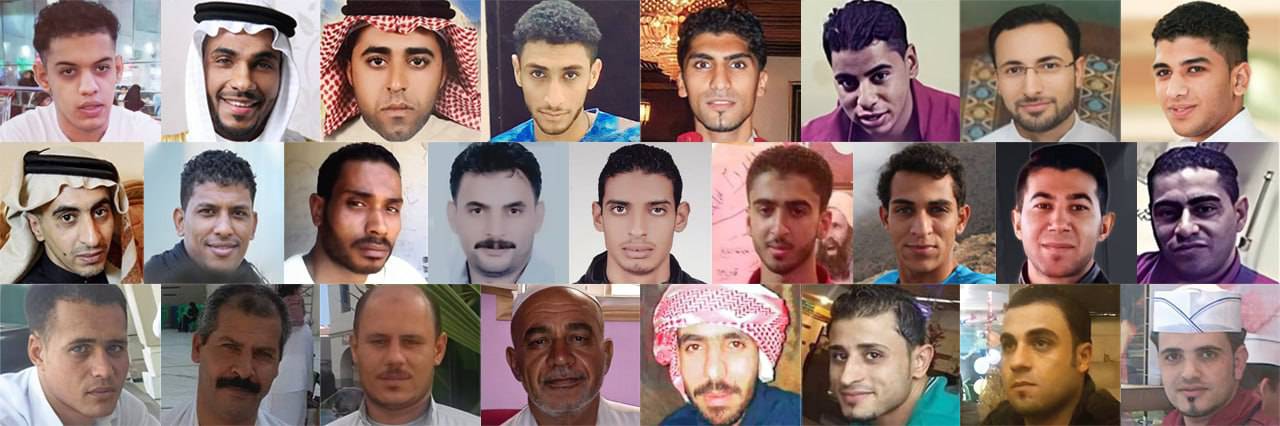
Saudi Arabia has broken its historical record for executions, with 347 death sentences carried out as of 21 December 2025, surpassing the previous record of 345 executions recorded in 2024.
In April 2018, around a year after consolidating his grip on power, Crown Prince Mohammed bin Salman stated in an interview with Time magazine that he intended to significantly reduce the use of the death penalty. He emphasized efforts to amend laws and replace capital punishment with life imprisonment in a number of cases, stressing that while the Kingdom would not abolish the death penalty entirely, it would limit its use extensively. However, the figures for 2025 reveal an unprecedented expansion in the application of capital punishment, rather than the promised reduction.
One of the most alarming aspects of this surge is the resumption of executions of child defendants. The organization documented the executions of Jalal al-Labbad and Abdullah al-Derazi, despite repeated international calls to halt such sentences. The last previously documented execution of a child had taken place in 2021, when Mustafa al-Darwish was executed.
Amid efforts to promote legislative reforms, the Crown Prince announced a package of legal regulations in February 2021, including a draft penal code for discretionary punishments. He stated that these reforms aimed to limit judicial arbitrariness and enhance the predictability of rulings. In contrast, available data indicate a widespread expansion in the use of discretionary death sentences, rather than any meaningful restriction.
The figures show that 79% of executions were carried out against individuals convicted of crimes that do not fall under the category of the “most serious crimes” according to international standards. These include non-lethal drug-related offences, which constitute the largest proportion, in addition to political charges.
On 3 March 2022, Mohammed bin Salman stated in an interview with The Atlantic that the death penalty was now limited exclusively to cases of murder, and that the decision rested with the victim’s family, either to seek retribution or grant forgiveness. Reality clearly contradicts this claim. Drug-related cases accounted for 69% of all executions in 2025, amounting to 238 executions, compared to 122 executions recorded in 2024—a dangerous expansion that directly contradicts this declared commitment.
Within this context, the increasing targeting of foreign nationals is particularly evident. Foreigners accounted for 57% of all those executed (202 individuals), and 94% of them were convicted of non-lethal drug-related offences. This occurred amid reports of serious violations during trials, raising grave concerns about discrimination and the absence of basic fair trial guarantees.
Furthermore, 2025 witnessed an unprecedented escalation in executions related specifically to hashish, with 97 death sentences carried out solely on charges involving this substance, compared to just 15 cases in 2024. This marks a qualitative escalation in the range of offences punishable by death.
The European Saudi Organization for Human Rights affirms that these figures may not reflect the true number of executions, given the lack of transparency and the possibility that additional sentences have been carried out without public announcement. These practices are characterized by severe abuses that often begin with torture and extend to denying families the right to farewell and burial.
The organization concludes that Saudi Arabia’s breaking of its historical execution record not only reflects the collapse of its human rights reform narrative, but also confirms the continued reliance on killing as a punishment—one that disproportionately targets the most vulnerable groups—in a structural contradiction with the statements and commitments announced over the past years.